
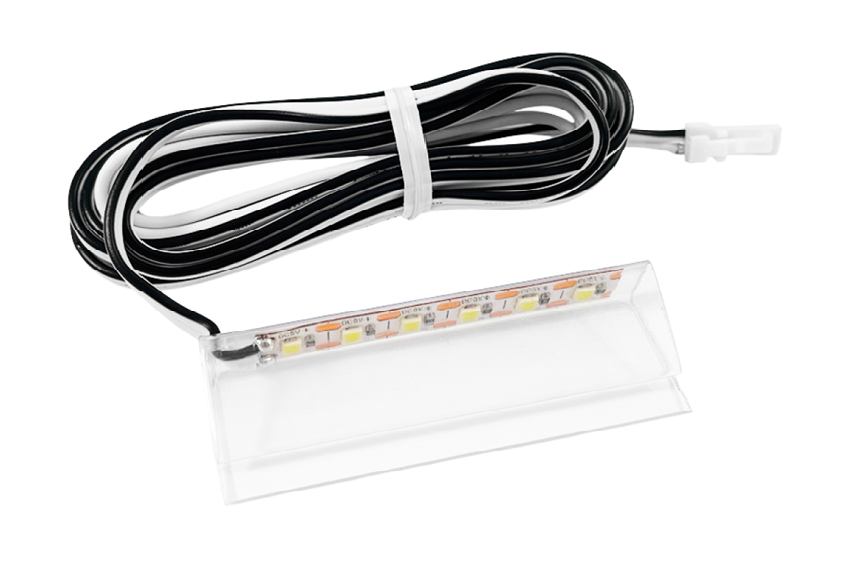
Battery-Powered Furniture Lighting for Cabinets Without Built-In Wiring

13 Views
Why existing furniture needs a different strategy
A completed wardrobe or bookcase may have no concealed route to a socket, and opening its panels can cause more disruption than the lighting upgrade justifies. Portable furniture lights give designers another option for improving visibility without rebuilding the cabinet. The trade-off is that runtime, charging access and mounting security become part of the specification. Start by identifying the exact activity: finding clothes, viewing a shelf or navigating a dark cupboard.
Map how people use the cabinet
A wardrobe light that operates for a few seconds when a door opens has different energy needs from a display light used throughout the evening. Make a simple usage estimate before choosing a fitting. Consider the number of daily activations, the desired brightness and whether a door or motion sensor suits the location. A rechargeable light placed too deep inside a cabinet can also be awkward to remove, even if it illuminates the shelves effectively.
Choose the right mounting position
For hanging clothes, a light near the front edge of the wardrobe projects illumination down the visible faces of garments. A fitting on the back wall may produce strong shadows behind stored items. Furniture Lamps on Batteries is one product category to compare against these installation requirements. Under a bookshelf, an unobtrusive light near the front can illuminate book spines or decorative objects. Check the door swing, drawer travel and clearance above clothes before fixing a clip, adhesive plate or magnetic mount.
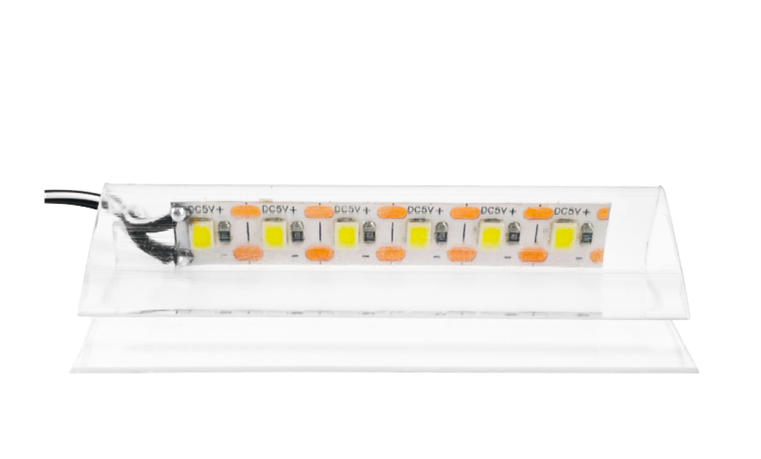
Understand charging and input requirements
Battery-powered and 5 V furniture fittings should not be treated as interchangeable products. A rechargeable luminaire includes an energy-storage system, while another model may require continuous external 5 V power. Check the specific product label and instructions, including charging voltage, connector type and permitted charger. Never assume that an unfamiliar USB-shaped connection accepts every power supply. Place charging leads away from hinges and sharp cabinet edges.
Read More: Choosing the Right Solar Generator for Home and Portable Use
Make charging convenient
The best charging location is accessible without emptying shelves. A removable lamp lets the user take the entire unit to a charging point; a fixed lamp may require a cable to reach inside the cabinet. Estimate how often recharging will be needed using the manufacturer’s runtime data at the intended brightness. A practical arrangement also gives the lamp a consistent return position so its beam remains aligned after each charging cycle.
Sensors can reduce unnecessary operation
A door sensor is useful for a closed wardrobe, while a motion sensor may suit a pantry or open shelving. Sensor coverage must include the natural approach direction and should avoid triggering continuously from passing traffic. Timed switch-off helps conserve stored energy when the door stays open. Before final mounting, test activation with the cabinet loaded because clothing, tall storage containers and doors can block a sensor’s view.
Balance brightness against glare
A small battery luminaire works best when its light falls on a narrow useful area. Excessive brightness wastes energy and can cause glare when the user looks directly into a cupboard. A diffuser reduces harsh points, while warmer light often suits bedroom wardrobes and neutral white helps identify labels or colours. Evaluate the beam under real conditions, including the ordinary overhead lighting and the darkest time of day.
Maintain the unit safely
Follow the maker’s charging and storage instructions, particularly around heat, damaged cables and battery condition. Avoid placing an electrical fitting where liquids are stored or cleaning spray will reach its connections. An adhesive attachment needs a clean compatible surface and sufficient curing time; a mechanical clip must fit the panel securely. Periodically inspect the mount because a loose light can be knocked free by moving garments.
Plan an upgrade that remains reversible
Furniture Lamps on Batteries are worth reviewing for rented homes, existing furniture and display systems that are frequently rearranged. Compare attachment methods, dimensions, sensors and power arrangements for each candidate model. A successful retrofit improves the way the cabinet works today while preserving the option to reposition or replace its lighting later.
Example: upgrading a rented apartment wardrobe
Consider a freestanding wardrobe in a rented apartment where drilling electrical channels is undesirable. A removable light fitted near the front upper rail can brighten hanging garments without altering the room wiring. The user first checks the available clearance above coat hangers and the location of the opening doors. Next comes a test of the chosen mounting surface, followed by a trial at night when general lighting is low. A motion or door-operated light should activate before the user reaches the clothes and switch off reliably afterward. If charging requires removing the unit, the mount needs to remain secure through repeated attachment cycles. The finished upgrade should be reversible and should not leave dangling charging cables among the garments.
Estimate the maintenance routine before purchase
Product runtime claims need to be interpreted in relation to brightness and use. A light operating briefly inside a wardrobe might require less frequent charging than a display lamp left on for hours each evening. Record the user’s normal routine and compare it with the manufacturer’s stated operating conditions. If the unit has multiple brightness settings, check whether runtime information applies to the setting that will actually be used. Plan a convenient place to charge the device and a safe spot to store its cable. Anyone using the cabinet should understand the charging indicator or switching behaviour. Treating charging as part of furniture maintenance prevents a useful light from becoming a neglected accessory.
Read More: Don’t believe these myths about concrete fencing in Boise
Situations that call for another solution
Battery lighting is useful for convenient retrofits, but it is not necessarily the best system for every illuminated cabinet. Large display furniture with long daily operating hours may be better served by a professionally planned permanent supply. A wardrobe with existing low-voltage wiring may already offer straightforward access to a fixed luminaire. Very warm, enclosed or damp storage locations require particular attention to product suitability and battery instructions. In commercial showcases, repeated charging can add maintenance work for staff. Compare available power, usage duration and access before choosing portability as a primary feature. The goal is a convenient, dependable lighting routine rather than portability for its own sake.
For related furniture and architectural lighting components, the LEDUA catalogue offers a wider range of fittings, electrical accessories and installation options. Select each component from its actual technical documentation and coordinate the complete assembly before installation.